
Can cultures be managed within organisations?
What is culture? In a society a culture means how the human behave with in it. Organizational culture is basically the same even though over the years the definition has changed. Organisational Culture is several people interacting with each other for the purpose of accomplishing some goal in their defined environment.
There is a link between Job satisfaction and an organisations culture. Job satisfaction was positively related to clan and adhocracy cultures, and negatively related to market and hierarchy cultures (Lund 2003).
Netflix Culture Problem
Netflix started out as an DVD-by-mail service. The company was one of the first to see the potential of streaming technology and began to transition to a subscription video-on-demand model in 2007. Since this transition, annual revenue has grown from 1.2 billion to over 11.6 billion in just ten years (Topic: Netflix 2019).
Shalini Ramachandran and Joe Flint of The Wall Street Journal interviewed 70 current and former Netflix employees, picking apart the culture describing the environment as “ruthless, demoralizing and transparent to the point of dysfunctional.”
According to Glassdor.com, website where current and former employees anonymously review companies and their management, we can see the employee’s thoughts about the organizational culture (Figure 1)
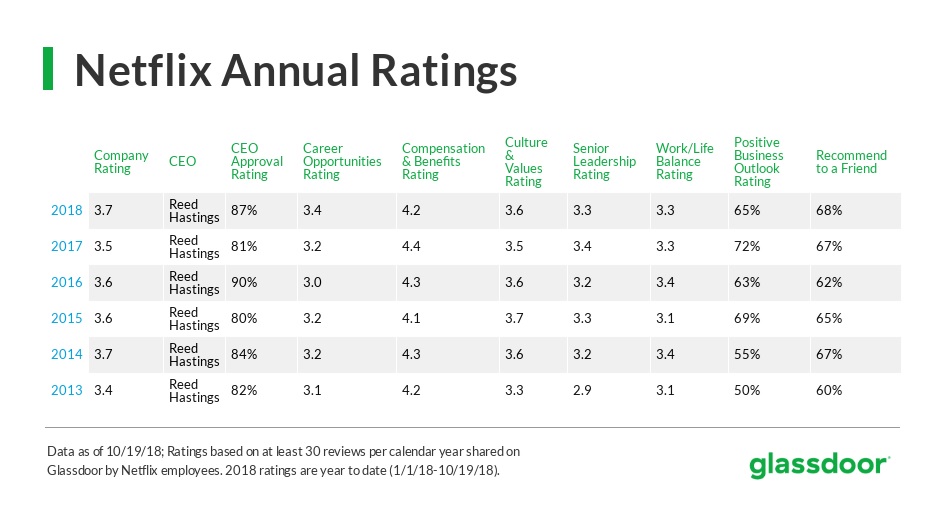
Figure 1; Source: glassdoor.com
Netflix has a move-fast-and-break-things culture. Netflix has a policy of firing employees who they find only adequate. The employee retention and job satisfaction in the company is not good. According to more than 800 anonymous employee reviews on company-rating website Glassdoor, Netflix has an approval rating of 3.7 out of 5. You can also see this in Figure 1.
A change in the company culture is required.
ICEBERG MODEL
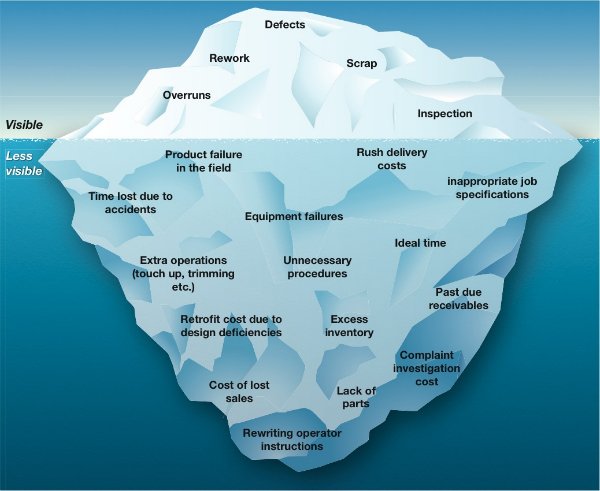
Figure 2; Source; waterpowermagazine.com
Culture can be defined as how things are done within an organisation and provides guidance for individuals within the organisation to achieve their goals (Hemerling et al. 2018). The iceberg model shows an iceberg in the middle of the ocean. If we look at it from the side, we can see the visible part on top the ocean and the invisible part below the ocean.
Behavioural aspects like the attitude of the employee, personality, communication, which is often overlooked at the bottom of the iceberg. These aspects affect the productivity and quality of the workplace most of the time.
Netflix has some challenges when it comes to the following
- Job satisfaction
- Resistance to change
- Low Job Security
- Low Team Morale
Handy’s Four Classes of Culture
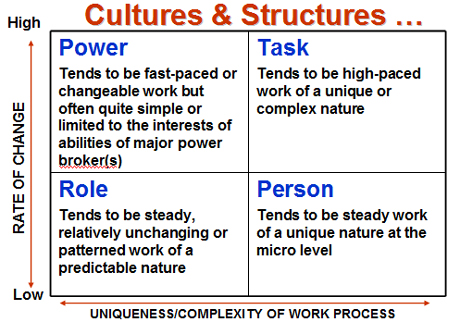
Figure 3; source: readytomanage.com
When we look at the handy’s four classes of culture in figure 3, we can conclude that Netflix houses a power culture. The other classes are task oriented, role oriented, person oriented. This was popularised by Charles Handy in 1999
Hofstede’s Cultural Dimensions
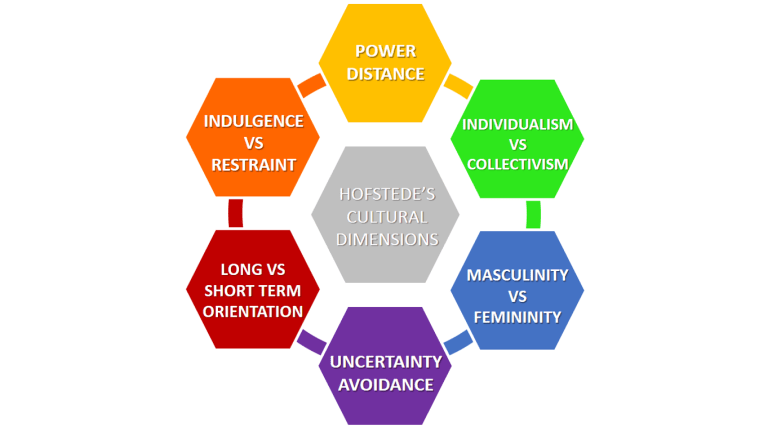
Source; Figure 3: business-to-you.com
The six dimensions are labelled:
1. Power Distance, related to the different solutions to the basic problem of human inequality
2. Uncertainty Avoidance, related to the level of stress in a society in the face of an unknown future
3. Individualism versus Collectivism, related to the integration of individuals into primary groups
4. Masculinity versus Femininity, related to the division of emotional roles between women and men
5. Long Term versus Short Term Orientation, related to the choice of focus for people’s efforts: the future or the present and past.
6. Indulgence versus Restraint, related to the gratification versus control of basic human desires related to enjoying life.
Each country has been positioned relative to other countries through a score on each (Hofstede 2019)
Cultural Web
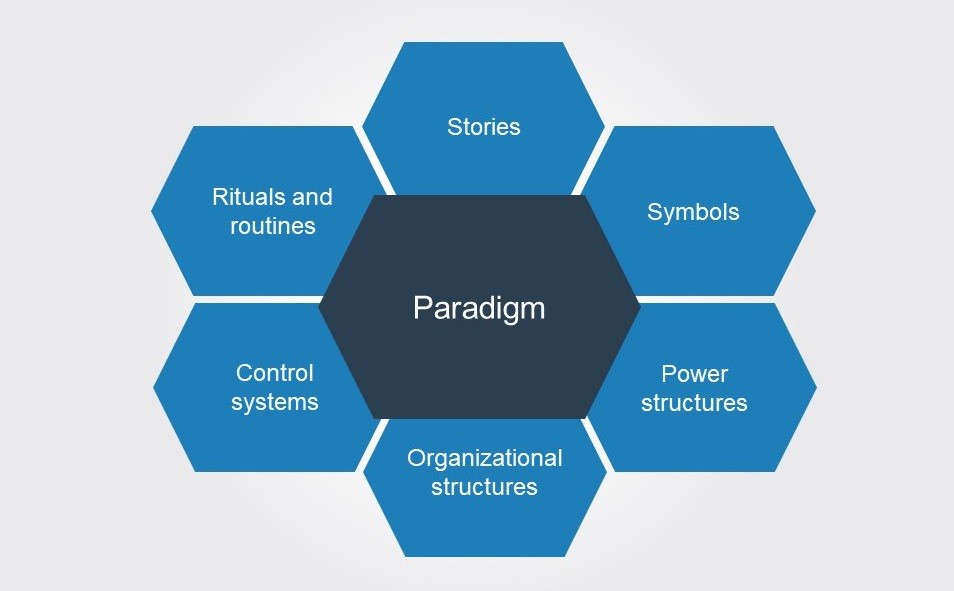
Figure 4; Source: toolshero.com
In figure 4, you can see the cultural web.
A leader can restore organizational culture using cultural web frameworks. First, it is necessary to align individual values and organizational values. Identifying the problems and areas of dissatisfaction with organizational culture is important to the leader. Observation and the company help to inform a leader about the approach to engage in situations improvement.
Recommendation
The problem in Netflix came because it was too transparent, and it has an adverse effect on the employees. The employee’s satisfaction became low and the company faced a tough situation on how to make the workplace more enjoyable. The employees raised their voices on the internet and there were a lot of publication that were quick to report on this.
References
Lund, D. (2003) “Organizational Culture And Job Satisfaction”. Journal Of Business & Industrial Marketing 18 (3), 219-236
Topic: Netflix (2019) available from <https://www.statista.com/topics/842/netflix/> [13 April 2019]
Hemerling, J., Kilmann, J., Danoesastro M., Stutts L. & Ahern C. (2018) It’s Not a Digital Transformation Without a Digital Culture [online] available from< https://www.bcg.com/en-gb/publications/2018/not-digital-transformation-without-digital-culture.aspx> [2 February 2019]
Hofstede, G. (2019) Dimensionalizing Cultures: The Hofstede Model In Context [online] available from <https://scholarworks.gvsu.edu/orpc/vol2/iss1/8/> [14 April 2019]
 Shebin's Leading In a Changing World Blog
Never knew Netflix wa?s facing a culture issue. Good Blog. How do you prevent issues in culture
LikeLiked by 1 person
Hi Shijil, Thanks for your comment. Preventing issues in the culture of the company, according to me is inevitable. Even if you keep an eye on the company’s internal and external environment, a change is inevitable. Its the reaction of the company to the issue that matters .Hope i answered your question .
LikeLike
How could Netflix do better in Asian countries?
LikeLiked by 1 person
HI sharm123, Thank you for taking time out and going through my blog. As you are aware I am from India. Netflix was late for the Asian market and is in competition from local competitors in the Asian market. Netflix should adapt their culture to be more inclusive of the newer markets.
Thanks for the comment.
LikeLike
Nice blog. Which culture is better? Power or Role?
LikeLiked by 1 person
Thanks for the Feedback.Hope you enjoyed the blog. While talking about which culture is better, there is no straight answer in some places Power Culture might work and in other culture Role Culture will work. To simply it If you have a high rate of change then you can opt for power and if you have a low rate of change you can opt for the role culture. There is no set solution. It depends on the scenario. Hope this answers your question
LikeLike
What do you think the most important thing to organisational culture?
LikeLiked by 1 person
Thank you for your question. First I would like to thank you for taking your time and reading my blog. A strong organizational culture keeps your company’s core values front and center in all aspects of its day-to-day operations and organizational structure. You can say the value and vision are very important factors to the organizational culture. Hope this clears your question.
LikeLike
This blog was an excellent read. Good work in including the theories.
LikeLiked by 1 person
Hope you Enjoyed this blog.
LikeLike